

Pulp Moulding Machine Price in India: Semi-Automatic vs Fully Automatic
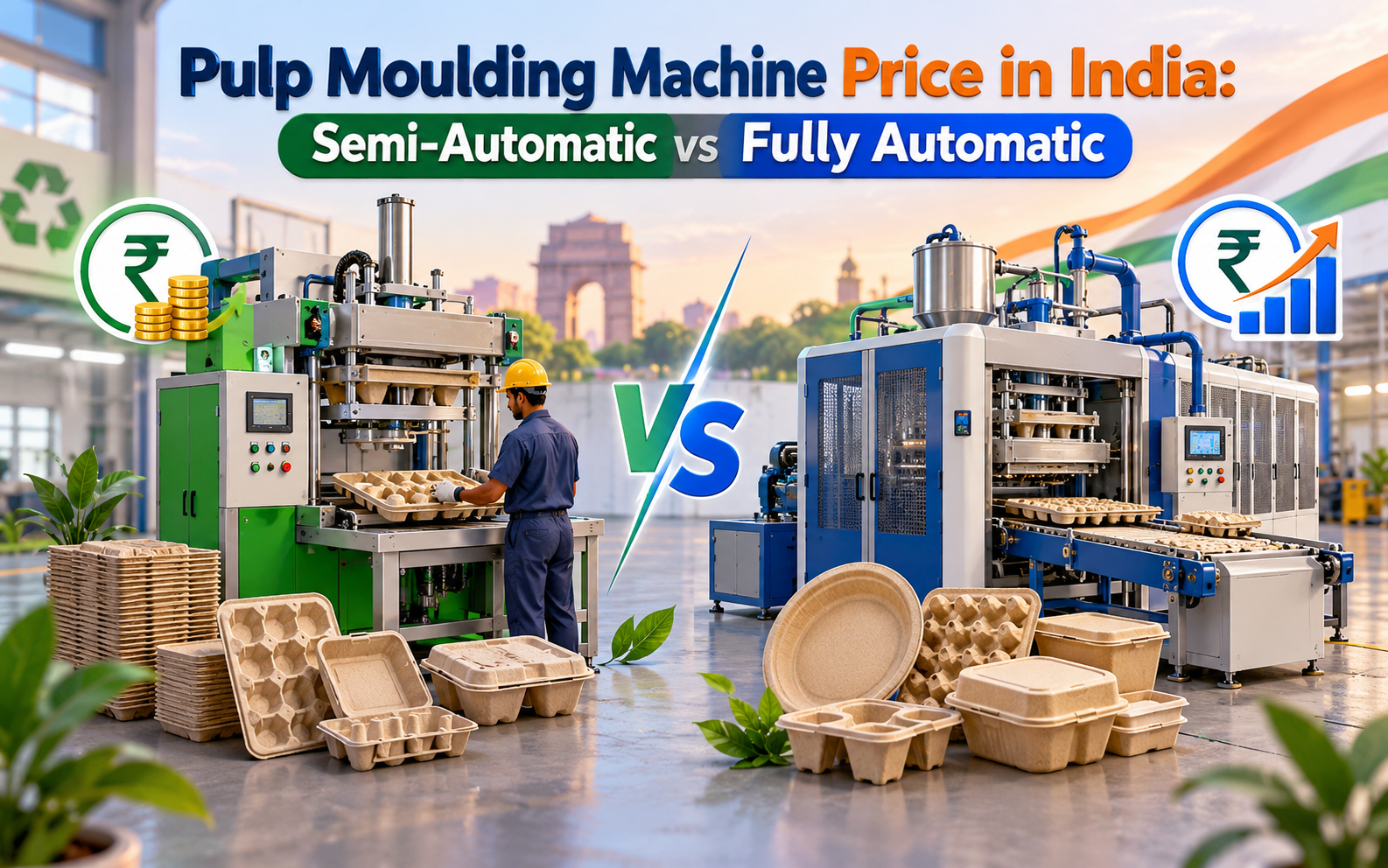
Author’s Note: This guide explains the price differences between semi-automatic and fully automatic pulp moulding machines in India. It covers machine costs, production capacity, operating expenses, and important purchasing considerations. Prices are indicative and may vary depending on specifications, automation, moulds, and installation requirements. Always confirm current prices with suppliers before investing.
Table of Contents
-
Understanding Pulp Moulding Machines
-
Pulp Moulding Machine Price in India
-
Semi-Automatic vs Fully Automatic Machines
-
Factors Affecting Machine Cost
-
How to Choose the Right Machine
-
Conclusion
-
Frequently Asked Questions
1. Understanding Pulp Moulding Machines
Pulp moulding is a manufacturing process that converts fibrous materials into shaped products such as disposable plates, bowls, food trays, egg trays, and protective packaging. Depending on the application, manufacturers can use recycled paper pulp, sugarcane bagasse fibre, or other suitable plant-based materials.
The manufacturing process generally involves preparing the pulp, transferring it into moulds, removing excess water, forming the product, and drying or hot-pressing it to achieve the required shape and finish.
Businesses planning to purchase a paper moulding machine should first identify their target products and production requirements. Machinery used for food-service tableware may differ considerably from equipment designed for industrial packaging or egg trays.
Understanding these differences helps businesses choose suitable equipment, control production costs, and avoid unnecessary investment.
2. Pulp Moulding Machine Price in India
The price of pulp moulding machinery depends on production capacity, automation, mould design, and the equipment included in the production line.
Indicative supplier quotations may fall within these broad ranges:
-
Semi-automatic machinery: Approximately ₹20 lakh to ₹45 lakh for certain configurations.
-
Fully automatic tableware machinery: Approximately ₹1 crore to ₹1.25 crore for some specialised production lines.
-
Complete manufacturing setup: The investment may be higher when pulp preparation, drying systems, moulds, installation, and other supporting equipment are included.
These figures are estimates, not fixed market prices. Actual costs depend on the supplier and machine specifications.
It is important to understand that a paper plate making machine designed for ready-made paper blanks operates differently from machinery that forms tableware using wet pulp. Buyers should compare machines based on their manufacturing process, capacity, and intended products.
Likewise, the paper plate making machine price in india is not a reliable direct comparison for an entire bagasse tableware manufacturing line. Request detailed quotations to understand exactly what is included in the purchase price.
3. Semi-Automatic vs Fully Automatic Machines
Semi-automatic machines require operators to perform certain activities, including product handling, transfer, or finishing. They may suit businesses with moderate production requirements and a limited initial investment. However, manual operations can increase labour costs and influence production consistency.
Fully automatic machines automate more manufacturing stages, potentially including forming, hot pressing, product transfer, and stacking. They can support higher production volumes and reduce manual handling, but generally require a larger investment, trained technicians, and reliable utilities.
A disposable plate making machine may be suitable for a particular product category, but buyers should verify whether it can manufacture moulded-fibre products rather than assuming all plate-making equipment uses the same technology.
The best choice depends on expected sales, available capital, labour costs, and the production capacity required to fulfil customer orders.
4. Factors Affecting Machine Cost
Several factors influence the purchase price and ongoing operating expenses of pulp moulding machinery.
-
Production capacity: Higher output requirements may require larger forming areas, multiple moulds, and additional equipment.
-
Raw material processing: Machines that process prepared pulp may have different requirements from integrated lines that also process raw sugarcane bagasse.
-
Mould design: Different plate sizes, bowls, trays, and compartments may require separate mould sets.
-
Electricity and utilities: Heating systems, vacuum pumps, hydraulic components, and compressed air contribute to operating expenses.
-
Installation and maintenance: Transportation, commissioning, operator training, spare parts, and technical support should be included in the project budget.
When researching the sugarcane bagasse plates making machine price in india, request a quotation that separates the machine price from moulds, auxiliary equipment, installation, and applicable taxes.
5. How to Choose the Right Machine
Start by identifying your target customers, such as restaurants, caterers, wholesalers, food packaging companies, and distributors. Estimate their demand and determine which product sizes and designs you need to manufacture.
Before purchasing, request product samples and verify the manufacturer’s production claims. Check the machine’s power requirements, warranty, spare-part availability, installation support, and after-sales service.
If sustainability is a priority, evaluate an eco-friendly disposable plate-making machine based on its material compatibility, production efficiency, and finished-product quality. Ensure that environmental and compostability claims are supported by appropriate testing and certifications.
It is equally important to assess the supplier’s experience. A reliable Disposable Machine Making Manufacturer should provide transparent pricing, written technical specifications, operator training, and clear warranty terms.
Finally, calculate the expected cost per saleable unit, including raw materials, labour, electricity, packaging, maintenance, and wastage. This will help you estimate profitability and select machinery that matches your business goals.
Conclusion
Choosing between semi-automatic and fully automatic pulp moulding machinery requires balancing the initial investment with production efficiency and long-term operating costs. Semi-automatic equipment may suit businesses with moderate production requirements, while fully automatic systems can benefit larger operations with established demand.
Compare complete project costs, verify technical specifications, and select a reliable supplier before investing. A realistic financial plan and the right machinery can help build an efficient manufacturing operation and support future business growth.
Frequently Asked Questions
1. What is the price of a pulp moulding machine in India?
Prices vary depending on machine type and capacity. Some semi-automatic systems may cost several lakhs, while specialised automatic tableware production lines can exceed ₹1 crore.
2. Which is better: semi-automatic or fully automatic machinery?
Semi-automatic machinery may suit smaller businesses with moderate production requirements. Fully automatic equipment is generally more appropriate when higher output and reduced manual handling justify the additional investment.
3. What products can pulp moulding machines manufacture?
Depending on the machine and mould design, they can manufacture plates, bowls, food trays, egg trays, protective packaging, and other moulded-fibre products.
4. What additional costs should I consider?
Consider moulds, installation, factory preparation, electricity, water, raw materials, labour, maintenance, packaging, transportation, and working capital.
5. How can I calculate the profitability of a pulp moulding business?
Calculate the total cost per saleable product and compare it with the expected selling price. Include machine utilisation, wastage, labour, electricity, packaging, distribution, and customer demand when estimating profitability.


