Disposable Plate Making Machine: How to Choose the Right One (Buyer’s Guide)
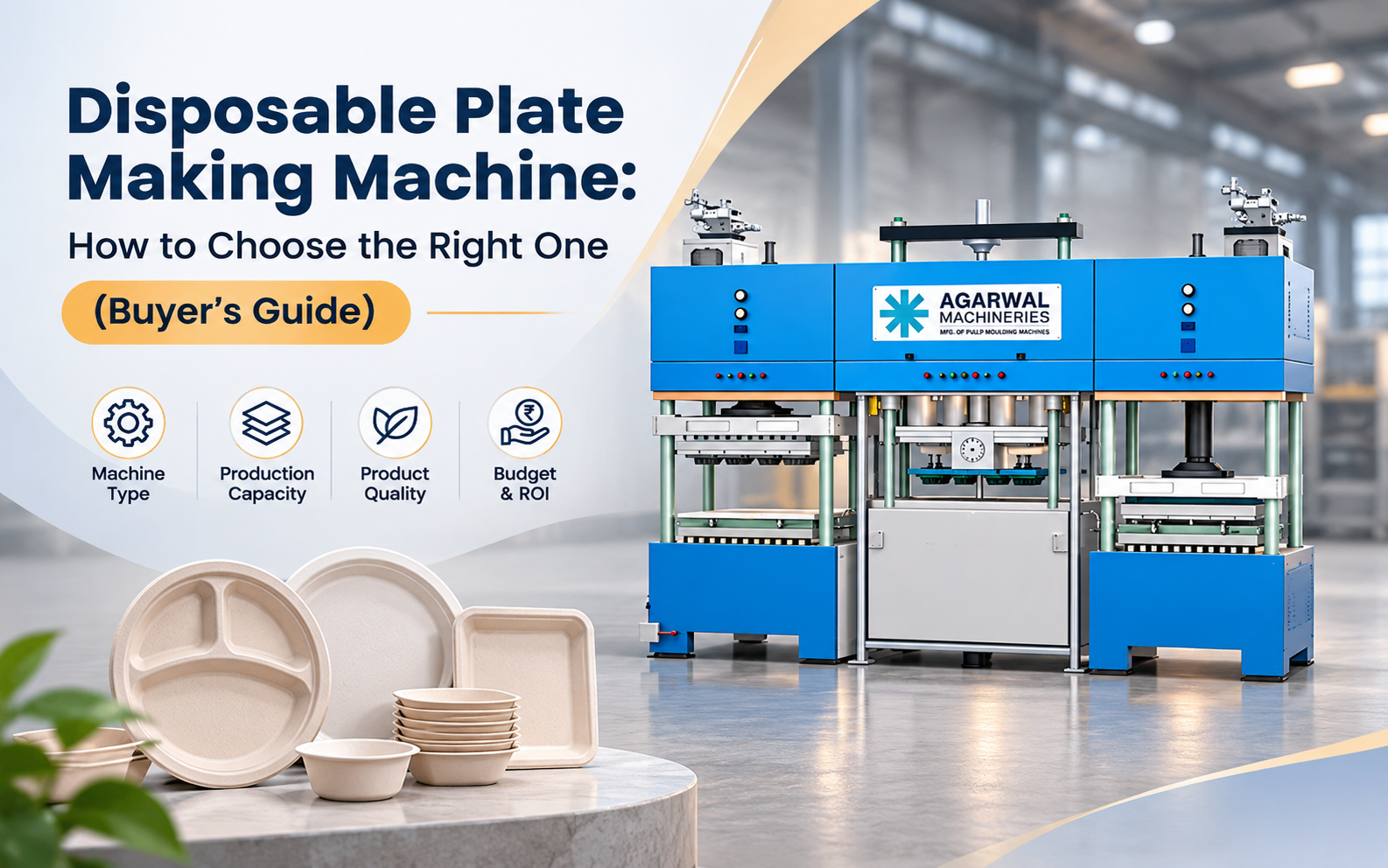
Author’s Note: Choosing the right disposable plate manufacturing machine is an important decision for anyone planning to enter the disposable tableware industry or expand an existing manufacturing business. This buyer’s guide explains different machine types, production capacities, pricing considerations, technical specifications, and important factors to evaluate before purchasing. The information is intended to help buyers make informed investment decisions and select equipment according to their business requirements.
Table of Contents
-
Understanding Disposable Plate Making Machines
-
Types of Disposable Plate Making Machines
-
Important Factors to Consider Before Buying
-
Machine Price and Investment Considerations
-
How to Select the Right Manufacturer
-
Conclusion
-
Frequently Asked Questions
1. Understanding Disposable Plate Making Machines
Disposable plates are widely used in restaurants, hotels, catering services, food delivery businesses, street food outlets, and event management. Their convenience and growing demand for hygienic food packaging have created opportunities for manufacturers in the disposable tableware industry.
A disposable plate manufacturing machine is designed to produce plates in different shapes, sizes, and materials. Depending on the machine configuration, it may manufacture products using paper, paperboard, or moulded natural fibres such as sugarcane bagasse.
The manufacturing process varies according to the raw material. Paperboard machines generally use pre-cut paper blanks, while bagasse tableware machines process fibre pulp through moulding, pressing, and drying stages.
Before purchasing equipment, buyers should identify the products they want to manufacture, their target customers, and their expected daily production volume. This initial assessment makes it easier to select suitable machinery and avoid unnecessary expenses.
2. Types of Disposable Plate Making Machines
Different machines are designed for different production requirements. Understanding their features is essential before making an investment.
Semi-automatic machines require some manual involvement during production. Operators may need to feed materials, handle finished plates, or perform certain processing activities. These machines can be suitable for startups and businesses with moderate production requirements.
Fully automatic machines perform several production activities with limited manual intervention. Depending on the model, they may include automatic feeding, forming, pressing, and product collection systems. They are generally suitable for businesses targeting higher production volumes.
Paper Plate Manufacturing Machines
These machines manufacture plates using paperboard or coated paper blanks. They are commonly selected by businesses producing conventional disposable paper plates in different sizes and designs.
Bagasse Plate Manufacturing Machines
These machines use processed sugarcane fibre pulp to manufacture plates, bowls, trays, and food containers. They require specialised moulding equipment and drying systems. Their production process is different from conventional paper plate manufacturing.
Selecting the right machine category depends on your preferred raw material, product range, investment capacity, and customer demand.
3. Important Factors to Consider Before Buying
Buying machinery involves more than comparing prices. Several technical and commercial factors can influence production efficiency and business profitability.
Production Capacity: Check the number of plates the machine can manufacture per hour or per day. Compare the manufacturer’s stated output with realistic production conditions, including mould changes, maintenance, and operator requirements.
Raw Material Compatibility: Confirm whether the equipment supports paperboard, coated paper, or bagasse pulp. Do not assume that one machine can process every type of raw material.
Plate Sizes and Designs: Consider whether you want to manufacture small plates, large dinner plates, compartment plates, or different shapes. Check how many moulds are included and whether additional moulds can be purchased.
Electricity Consumption: Examine the machine’s connected load, actual power consumption, and operating requirements. Electricity expenses can significantly affect the cost of manufacturing.
Maintenance and Spare Parts: Ask about spare-part availability, routine servicing, warranty coverage, and technical assistance. Reliable maintenance support helps reduce unexpected production interruptions.
Product Quality: Request samples and check the finished plates for thickness, strength, shape, finishing, and consistency. For food-contact products, verify that the materials and manufacturing process meet applicable safety requirements.
4. Machine Price and Investment Considerations
The investment required for disposable plate manufacturing depends on machine type, automation, production capacity, and the included accessories.
For example, conventional paper plate machines may require a relatively smaller investment compared with specialised automatic bagasse tableware production lines. However, actual prices vary considerably between models and suppliers.
Apart from the machine purchase price, buyers should calculate additional expenses such as:
-
Raw material inventory and transportation.
-
Moulds and replacement tooling.
-
Factory rent and electrical installation.
-
Labour and operator training.
-
Packaging and finished-product storage.
-
Maintenance and spare parts.
-
Working capital for daily operations.
A common purchasing mistake is investing the entire available budget in machinery without keeping sufficient funds for production and business operations.
Prepare a complete project budget before placing an order. Also calculate the manufacturing cost per plate by considering raw materials, electricity, labour, packaging, and production wastage. This helps determine whether your expected selling price can generate a sustainable profit.
5. How to Select the Right Manufacturer
Choosing a reliable machinery supplier is just as important as selecting the machine itself. A professional manufacturer should provide accurate technical information, transparent pricing, installation support, and dependable after-sales service.
Before finalising your purchase, consider the following points:
-
Verify Experience: Check the manufacturer’s experience in producing the specific type of machinery you require.
-
Request a Demonstration: Ask for a live production demonstration or videos showing the machine operating under actual conditions.
-
Compare Quotations: Obtain quotations from multiple suppliers and compare specifications rather than focusing only on the lowest price.
-
Check Warranty Terms: Understand the warranty period, covered components, and service conditions.
-
Confirm Installation Support: Ensure that installation, commissioning, and operator training are clearly explained.
-
Discuss Future Expansion: Check whether the machine can accommodate additional moulds or production upgrades as your business grows.
A reliable supplier should be willing to answer technical questions and provide written confirmation of machine specifications, production capacity, delivery timelines, and commercial terms.
Conclusion
Choosing the right disposable plate manufacturing machine requires careful planning, technical evaluation, and a clear understanding of your business objectives. Whether you select semi-automatic, fully automatic, paper-based, or bagasse-based machinery, the decision should be based on production requirements, raw material compatibility, investment capacity, and long-term operating costs.
Take time to compare manufacturers, inspect product samples, and evaluate after-sales support before purchasing. The right machinery can help improve production consistency, control operating expenses, and build a manufacturing business capable of meeting changing market demand.
Frequently Asked Questions
1. Which disposable plate making machine is best for beginners?
Semi-automatic machinery can be a suitable starting option for beginners with moderate production requirements and limited initial investment. The right choice depends on the target product and available budget.
2. What raw materials are used in disposable plate manufacturing?
Common materials include paperboard, coated paper, recycled paper pulp, and processed sugarcane bagasse fibre. The material depends on the machine and the type of plate being manufactured.
3. Is a fully automatic plate making machine better than a semi-automatic machine?
Fully automatic machines generally offer greater automation and reduced manual handling. Semi-automatic machines may be more economical for businesses with smaller production targets.
4. What should I check before purchasing a disposable plate manufacturing machine?
Check production capacity, electricity consumption, raw material compatibility, mould availability, finished-product quality, warranty, installation, and after-sales service.
5. Is disposable plate manufacturing a profitable business in India?
It can be a business opportunity because plates are used across food service, catering, retail, and hospitality sectors. However, profitability depends on production costs, local competition, customer demand, product quality, and effective distribution.